Building Resilience in Primary School Children
Ask any teacher what they want for the children in their care, and somewhere near the top of the list you’ll find one word: resilience. We want children who can meet a setback without falling apart, who can try, fail, and try again. But here’s the honest truth we’ve learned across years in the classroom and hundreds of workshop days — you cannot teach a child to bounce back by asking them to fill in a worksheet about bouncing back.
Building resilience in primary school children happens through experience. It’s built in the moment a plan goes wrong and a child chooses to keep going anyway. It’s the wobble, the deep breath, and the second attempt. Resilience is a muscle, and muscles are grown by lifting something real.
We’re Lizzie and Holly, two qualified, DBS-checked primary teachers based in Chesterfield. We bring hands-on, screen-free workshop days into schools across Derbyshire, South Yorkshire and Nottinghamshire — and we’ve seen first-hand what genuinely grows grit in a child. So here are five ways that practical, challenge-based days build the resilience your children need, and why an in-person workshop day does the heavy lifting for you.
1. Safe-to-fail challenges: where getting it wrong is the point
Children are quietly brilliant at reading a room. They know when a task is really a test, and when getting it wrong will feel like being wrong. That fear is the enemy of resilience, because a child who is afraid to fail simply stops trying.
The antidote is a safe-to-fail challenge — a task where a wobble is expected, welcomed, and completely low-stakes. When a team’s first attempt doesn’t work, nobody’s report card is affected. There’s no red pen. There’s just the puzzle in front of them and a friendly grown-up saying, “Interesting — what could you try next?”
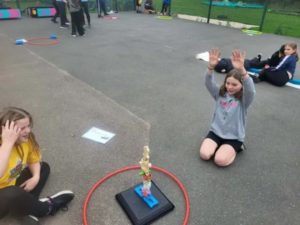
In our Puzzle Pit Stop Challenge, for instance, most teams get it wrong before they get it right — and that’s by design. Failure becomes information rather than judgement. Children learn that a first “no” is just the start of the process, and that discovery is one of the most powerful, transferable lessons a school can offer.
2. Shared goals and grit: pulling in the same direction
Resilience is easier to find when you’re not looking for it alone. Give a group of children a shared goal — something they genuinely want to achieve together — and something rather wonderful happens. The child who might give up on their own keeps going because their team is counting on them.
This is where teamwork and perseverance become the same thing. When a challenge demands that everyone contributes, children practise the small, unglamorous acts that grit is actually made of:
- Listening when their first idea isn’t the one chosen
- Encouraging a teammate who’s stuck
- Trying a different approach when the obvious one fails
- Staying with a task through the tricky middle bit, not just the exciting start
These are the quiet skills that underpin character education — and they’re almost impossible to deliver from the front of a classroom. They have to be lived. A well-designed team challenge gives every child, including the quieter ones, a real role and a reason to persevere.
3. Real tools and real responsibility
Here’s something we feel strongly about: children rise to the level of trust you place in them. Hand a nine-year-old a real spanner, real nuts and bolts, and a genuine job to do, and you’ll watch them stand a little taller.
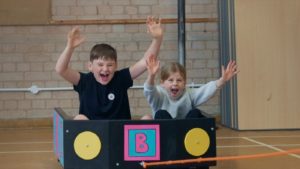
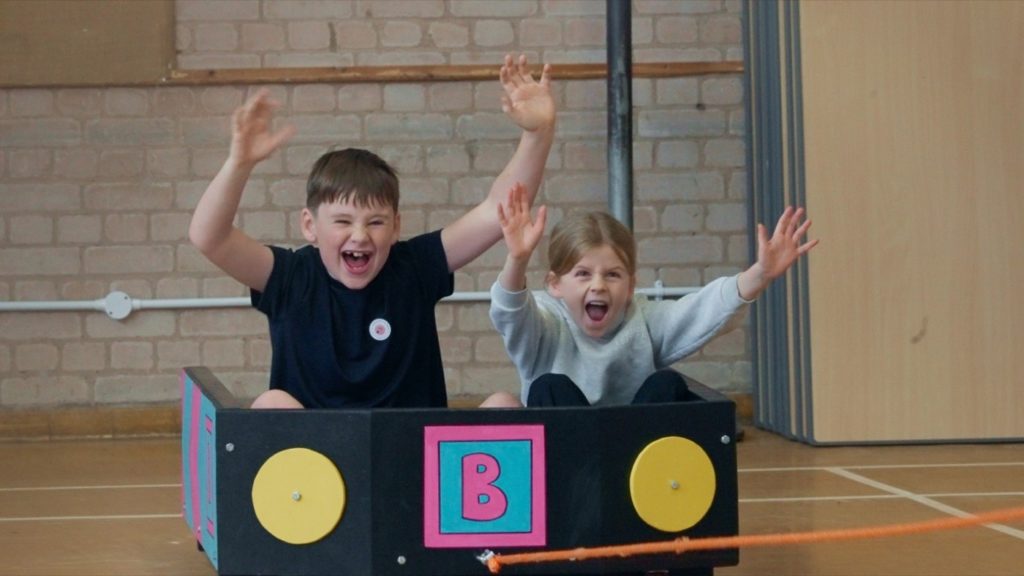
Our flagship Ultimate Car Quest is built entirely on this idea. Teams build, race and actually ride flat-pack cars using real tools — not toys, not pretend. When a bolt won’t tighten or a wheel isn’t sitting right, there’s no teacher to swoop in and fix it. The children have to diagnose the problem, work out a solution, and see it through. That’s real responsibility, and it builds a very particular kind of resilience: the confidence that comes from knowing “I can sort this out myself.”
There’s a beautiful side effect, too. Children who struggle to shine in a literacy or numeracy lesson often come alive when the task is practical and physical. A day like this can completely reframe how a child sees themselves as a learner — and how their classmates see them.
If you’re wondering how a day like this could work for your class, take a look at our workshops — every one is bespoke, so we shape the day around exactly the children you know best.
4. Naming the wobble: putting words to big feelings
Resilience isn’t about never feeling frustrated. It’s about feeling frustrated and carrying on anyway. And children can only manage a feeling once they can name it.
Throughout a hands-on day, feelings run high in the best possible way — the fizz of excitement, the sting of a plan collapsing, the frustration of a challenge that won’t budge. Rather than smoothing these over, we gently name the wobble as it happens: “That’s the tricky bit — everyone feels it. What do we do with that feeling?”
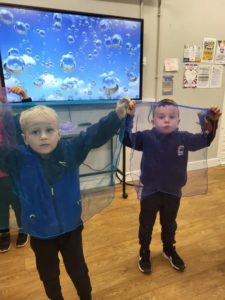
This is emotional regulation in its most natural habitat. We weave in moments to pause and reset — our River of Calm activity gives children a genuine, practised way to steady themselves before diving back in. Over a single day, children build a small but powerful vocabulary for their own emotions, and the beginnings of a strategy for managing them. That’s the heart of wellbeing and PSHE, delivered not as theory but as lived experience they’ll remember.
5. A win they truly earned
The final, and perhaps most important, ingredient is the payoff. There is nothing quite like the roar that goes up when a team’s car finally crosses the line, or when a puzzle that seemed impossible suddenly clicks into place.
This matters because it’s a win they earned. Not a sticker handed out for turning up, but a genuine achievement that came after the struggle, because of the perseverance. That sequence — the difficulty, the doubt, the effort, and then the success — is the exact emotional pattern that builds lasting resilience. It teaches children a lesson worth more than any certificate: “When something is hard, I can push through it.”
And when they carry that feeling back into your classroom the next morning, you have a shared reference point to return to all year. “Remember the Car Quest? Remember how you didn’t give up?” That’s resilience with a memory attached.
Bringing resilience to life in your school
You already know your children need these skills — and you know Ofsted is looking closely at personal development and character. What you don’t have is spare hours to plan and prep an elaborate day from scratch.
That’s exactly where we come in. We arrive with all the equipment, all the planning, and two experienced teachers ready to run the whole day. You get to step back and watch your children surprise you. Every workshop is bespoke — your day, your way — shaped on a friendly planning call around the exact needs of your class, whether that’s a Year 6 cohort building confidence before transition or a whole-school focus on wellbeing.
Because here’s our promise, and it’s the heart of everything we do: if the children aren’t smiling, we’re not doing our job — but if they’re problem-solving through the smiles, that’s the real win.
If you’d like to give your children a genuine, memorable day of resilience-building — with none of the staff prep — we’d love to hear from you. Arrange a planning call and let’s design a day your children will still be talking about long after the tools are packed away.