Year 6 Transition Day Activities That Work
You know the feeling. It’s the summer term, the SATs are behind you, and there’s a room full of children who are half thrilled, half terrified about what comes next. Whether you’re planning Year 6 transition day activities to send your leavers off with confidence, or welcoming a brand-new cohort in September, the same question comes up every year: how do we make this day actually land — not just fill it with worksheets?
We’re Lizzie and Holly, two qualified primary teachers based in Chesterfield, and between us we’ve run more transition days than we can count. We’ve learnt what works, what falls flat, and what children remember long after the wall displays come down. Here’s our practical guide to transition day ideas that ease nerves, build new friendships and set the right tone for the year ahead.
Why transition days matter more than we sometimes admit
Transition is one of the biggest emotional leaps a child makes in primary school — whether it’s the move from KS2 to secondary, or simply settling into a new class with a new teacher. Get it right and children arrive in September feeling safe, curious and ready to learn. Get it wrong and you spend the first half-term rebuilding confidence that a good day could have set from the start.
It matters for you, too. Ofsted’s focus on Personal Development means the pastoral care wrapped around transition is no longer a “nice to have” — it’s part of how a good school is judged. The good news? The things that tick that box are also the things children love most: belonging, resilience, teamwork and a genuine sense of “I can do this.”
Go beyond the worksheet: what children actually need
Worksheets have their place, but a nervous child doesn’t relax by filling in a “My New School” sheet. They relax by doing — by laughing with someone new, solving a problem as a team, discovering they’re braver than they thought. When you’re planning, aim to give children three things:
- A sense of belonging — chances to talk to children they don’t yet know, without the pressure of a blank page.
- A small, safe challenge — something a bit tricky that they conquer together, so they leave feeling capable.
- A shared memory — one moment they’ll still be talking about at teatime, that ties the new group together.
Hold those three in mind and almost any activity becomes a transition activity.
Icebreakers that don’t make anyone cringe
The first half hour sets the tone. Skip anything that puts a shy child on the spot in front of strangers. Instead, try low-stakes mixers that get everyone moving and talking:
- Find someone who… — a gentle scavenger hunt of facts (“has a pet rabbit”, “has been to the seaside this year”) that gets children chatting one-to-one.
- Silent line-ups — order yourselves by birthday month without speaking. Instant giggling, instant teamwork.
- Two truths and a wish — a kinder spin on the classic: two true things and one thing you’re hoping for next year. It surfaces worries gently and shows children they’re not the only nervous one.
- Group flags — new mixed teams design a quick emblem for themselves. It creates an “us” in under ten minutes.
Team challenges that build real friendships
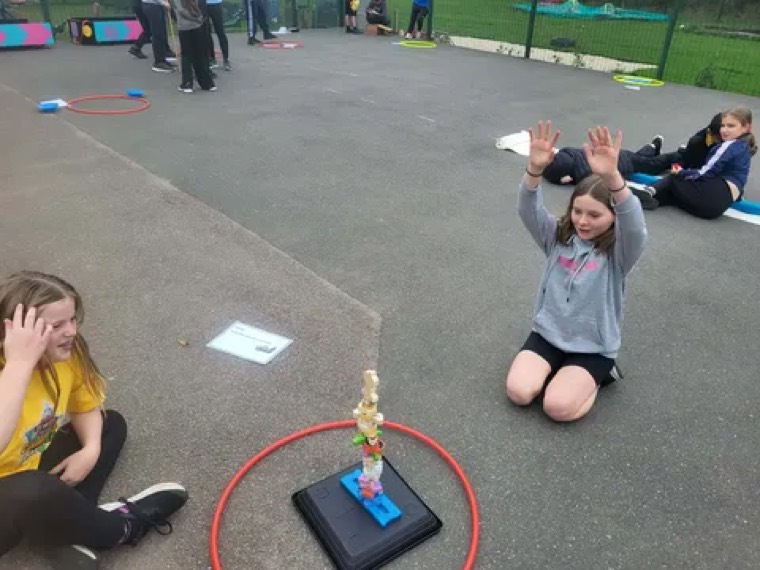
This is where the magic happens. Nothing bonds a group of near-strangers faster than a shared challenge with a bit of friendly urgency. The key is mixing children who wouldn’t normally choose each other, then giving them a goal they can only reach together.
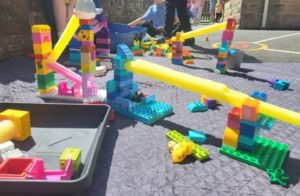
Hands-on, screen-free challenges work best because they level the playing field — the quiet child who struggles with writing might be the one who cracks the puzzle or steadies the wheel. A few of our favourites, drawn from the kinds of days we run in schools:
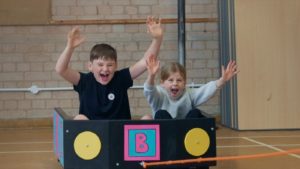
- Build-and-race challenges — teams assemble something real with proper tools, then test it together. Our Ultimate Car Quest has children building, racing and actually riding flat-pack cars — you can see the confidence grow with every lap.
- Timed problem-solving — fast-paced puzzle stations, like our Puzzle Pit Stop Challenge, where teams have to communicate, delegate and think on their feet.
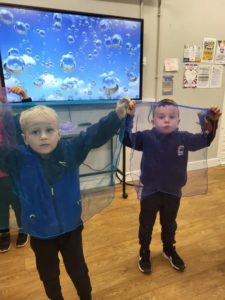
- Water challenges — brilliant for a summer transition day, full of collaboration, laughter and the odd soaking.
These aren’t just fun for the sake of it. Every one of them quietly teaches communication, resilience and teamwork — the exact skills children need to walk into a new class or a new school and thrive.
If organising all this on top of your end-of-year to-do list sounds exhausting, that’s precisely where we come in. Take a look at our workshops — we bring everything, set up, run the day and pack it all away, so your team can simply enjoy watching the children shine.
Don’t forget the nerves: wellbeing on transition day
A great transition day isn’t all noise and racing. Build in a calmer thread too, especially for younger children moving up within school. Quiet, reflective moments give anxious children somewhere to land and help everyone process a big change.
- Worry postboxes — children post a question or worry anonymously; you answer the common ones together, so nobody feels singled out.
- Mindful moments — simple breathing and grounding activities (our River of Calm sessions are built exactly for this) that give children tools they can use on their own first-day nerves.
- Buddy pairing — end the day by pairing children up as go-to friends for September, so no one walks in alone.
Naming nerves out loud — and showing children that everyone has them — is often the single most reassuring thing you can do.
A simple structure for the day
You don’t need a minute-by-minute masterplan, but a loose rhythm keeps energy up and prevents the mid-afternoon slump. A shape we come back to again and again:
- Warm welcome and icebreakers — settle nerves, mix the groups, set a friendly tone.
- The big team challenge — the hands-on centrepiece where friendships form and confidence grows.
- Lunch and free play — unstructured time is when new friendships really take root.
- A calmer, reflective session — process the change, share hopes, ease the worries.
- Celebration finish — a quick round of “something I’m proud of today” to send everyone home smiling.
Whatever you choose, protect the ending. The last ten minutes are what children carry home — and what they’ll remember when they walk in nervous on that first real day.
Zero prep for staff: how a hands-on workshop day helps
Here’s the honest bit. Transition days are wonderful, but planning one from scratch — sourcing kit, prepping stations, keeping thirty children safely engaged all day — is a huge ask on top of everything else the summer term throws at you.
That’s exactly what we do. We’re two qualified, DBS-checked primary teachers who come into your school and run the whole day for you. Every day is bespoke — your day, your way — built from a library of 50+ team-building, STEM, PE and wellbeing activities on a friendly planning call, so it fits your children, your space and your goals for transition. We bring all the equipment. You get to step back and watch it work.
Because we’re a small, local business, you deal with the two people who’ll actually be in the room — no call centres, no scripts, just two teachers who understand your world because we’ve lived it. And our promise is simple: if the children aren’t smiling, we’re not doing our job.
If you’d like to give your Year 6 leavers — or your new cohort — a transition day they’ll genuinely remember, we’d love to help you plan it. Arrange a planning call and let’s build a day that’s perfectly yours. We work with schools across Derbyshire, South Yorkshire and Nottinghamshire, and we’d be delighted to hear what you’re hoping to create.