Anti-Bullying Week Activities KS2 That Really Land
You know the feeling. Anti-Bullying Week is circled on the calendar, the assembly slides are half-ready, and there’s a nagging worry that it’ll all be over by Friday lunchtime without really changing how the children treat each other. If you’re a PSHE lead searching for Anti-Bullying Week activities KS2 that do more than fill a display board, you’re in exactly the right place.
We’re Lizzie and Holly, two qualified primary teachers based in Chesterfield. Between us we’ve planned more of these weeks than we can count, and we’ve learnt one thing above all: children don’t learn kindness from a poster. They learn it by doing it, feeling it, and talking about it afterwards. So this article is about active, experiential ideas that make empathy and friendship stick, well beyond mid-November.
Why posters and assemblies aren’t enough
Don’t get us wrong: a good assembly sets the tone, and Odd Socks Day is a brilliant, joyful way to kick off the week and celebrate what makes each of us different. But a message that’s only told to children rarely lands as deeply as one they experience.
Ofsted’s focus on personal development and on behaviour and relationships is really asking one question: are your pupils learning to treat one another well, for life? That’s a culture question, not a one-off event. The most powerful Anti-Bullying Week activities for KS1 and KS2 are the ones that put children into situations where empathy, communication and kindness are needed, not just named.
Here are the ideas we come back to again and again.
1. Walk in someone else’s (odd) socks: empathy in action
Empathy is a skill, and like any skill it can be practised. Try these:
- Perspective role-play: Give small groups a simple playground scenario, then ask them to freeze-frame it from three viewpoints: the child left out, the child doing the excluding, and a bystander. The conversation about the bystander is often the richest.
- Feelings detective: Children read short situations and map how each person might feel and why. It builds the emotional vocabulary they need to name what’s happening to them and others.
- The kindness ripple: Track one small act of kindness and predict how it might spread through a class by home time. Simple, and surprisingly powerful for Year 5 and 6.
Tie it back to Odd Socks Day: our differences are what make the team stronger, not weaker.
2. Communication challenges that show why kindness matters
So much unkindness starts as poor communication: a misread tone, an instruction that felt like an order, a joke that landed wrong. Active communication challenges let children feel this safely.
A classic to try: pair children back to back, one describing a simple picture while the other draws it, with no peeking. They quickly discover how easily messages get muddled, and how patience and clear, kind instructions get everyone to a better result. Debrief with one question: “What made your partner easier to work with?” The answers are always about respect and listening.
Extend it with group tasks where a team can only succeed if every voice is heard, including the quietest. That’s where genuine inclusion is learnt.
3. Trust and teamwork games that build a kinder class
You can’t force children to like each other, but you can give them shared experiences that build genuine trust and teamwork. A class that has laughed, problem-solved and succeeded together is far less fertile ground for bullying.
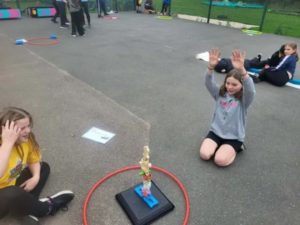
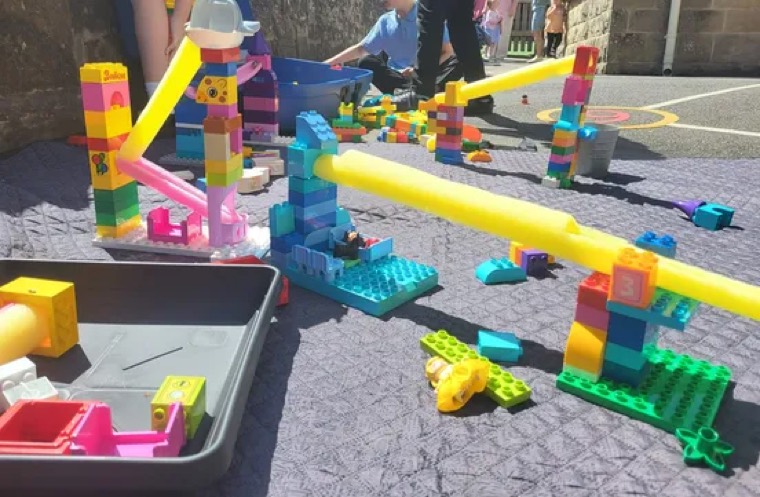
- Group problem-solving: A puzzle that simply cannot be cracked alone, so children have to pool ideas and take turns leading.
- Trust tasks: Guided, low-risk challenges where children rely on a partner’s clear, careful support to succeed.
- Mixed-up teams: Deliberately group children who don’t usually work together. Some of the best friendships start here.
This is exactly the kind of day we love bringing into schools. Every session we run is bespoke, “Your Day, Your Way”, built from a library of over 50 team-building, problem-solving and wellbeing activities and shaped around your children on a friendly planning call. We bring all the equipment; you get a screen-free day of the good stuff. If you’d like to see how a hands-on Anti-Bullying Week could look, take a peek at our workshops.
4. Problem-solving under pressure: The Ultimate Car Quest and Puzzle Pit Stop
When children solve problems together against the clock, all the abstract talk about kindness suddenly becomes real and necessary. Two of our flagship activities are built for exactly this:
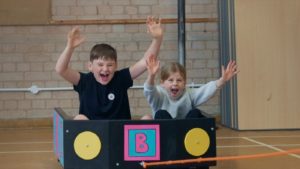
- The Ultimate Car Quest: A high-energy, collaborative challenge where teams have to communicate, share roles and keep each other calm to reach the finish. Nobody wins alone.
- Puzzle Pit Stop Challenge: An escape room-style problem-solving race that rewards listening, patience and encouragement over shouting the loudest.
You don’t need us to run these to get the principle: any challenge that makes children depend on one another teaches more about anti-bullying than a worksheet ever could. The magic is in the moment a struggling group chooses to encourage rather than blame, and then in the reflection that follows.
5. Friendship and kindness that outlast the week
The goal isn’t a good week; it’s a kinder classroom in February and June too. A few low-effort, high-impact ideas to keep it alive:
- Kindness pledges: Each child commits to one specific, doable act, then revisits it a fortnight later.
- Secret kindness missions: Children carry out small anonymous good deeds, a lovely way to show that kindness needn’t be for show.
- Friendship “recipe” writing: Groups design the ingredients of a good friend, brilliant for linking PSHE to literacy.
- A class kindness wall that keeps growing all half-term, so the message doesn’t come down with the display.
6. Reflection: the step most schools skip
The learning isn’t in the activity; it’s in the reflection afterwards. This is the difference between a fun day and a day that changes behaviour.
We always finish our sessions with a calm, structured wind-down — our River of Calm reflection is a favourite — where children think about how they worked together, who helped them, and what they’ll do differently. For KS1 this might be a simple thumbs-up circle; for KS2, a quiet written note or a partner chat.
Whatever the format, ask three questions: What did we do well as a team? When was someone kind to you? What will you carry into the playground tomorrow?
Make it the week they remember
Anti-Bullying Week works best when it’s felt, not just heard. Mix a joyful Odd Socks Day launch with genuinely active empathy, communication and teamwork tasks, then give children the space to reflect, and you’ll build something that lasts far beyond November.
And if you’d love a memorable, screen-free centrepiece for your week without adding to your own workload, that’s exactly what we do. As two qualified, DBS-checked primary teachers working with schools across Derbyshire, South Yorkshire and Nottinghamshire, we’ll design a bespoke team-building and communication day around your children and your goals for the week, and bring every last bit of equipment with us.
We’d genuinely love to help you make this Anti-Bullying Week your best one yet. Do arrange a planning call with us — there’s no pressure, just two teachers happy to share ideas.