Children’s Mental Health Week Activities That Stick
It is a Tuesday in November, you have a spare ten minutes at your desk, and the calendar reminder has just popped up: Children’s Mental Health Week is coming in February. You want to do it properly this year. Not a poster on the wall and a quick assembly, but something the children genuinely remember. Something that fits Ofsted’s focus on personal development and pupil wellbeing, without swallowing three weeks of your planning time.
We understand completely. We are Lizzie and Holly, two qualified, DBS-checked primary teachers based in Chesterfield, and between us we have planned more wellbeing weeks than we can count. So this guide is written teacher-to-teacher: a set of practical, screen-free Children’s Mental Health Week activities any primary can run, plus a few honest thoughts on how to make the week actually stick.
Start with the feeling, not the timetable
The temptation is to fill every slot. Resist it. The most powerful Children’s Mental Health Week activities give children space to notice how they feel and language to describe it, and that needs a little breathing room.
Before you plan a single session, decide on one simple message for the week that every adult can repeat. Something like “All feelings are okay, and there is always someone to talk to.” Keep it on the board, say it at the door, weave it into assembly. Consistency is what turns a themed week into something children carry with them.
A quick word on age
What works in Reception rarely lands with Year 6. For KS1, keep it sensory, playful and short. For KS2, you can go deeper into cause and effect, self-talk and helping others. We have flagged both below.
Screen-free emotional regulation activities for KS1
Younger children feel emotions in their bodies long before they can name them. These hands-on, screen-free ideas help them connect the two.
- Weather feelings: ask children to show you their “inside weather” this morning: sunny, cloudy, stormy, foggy. It gives even your quietest children a safe, playful way to check in.
- Breathing buddies: children lie down with a small soft toy on their tummy and watch it rise and fall as they breathe slowly. Calming, and it makes an abstract idea (slow breathing) visible.
- The calm-down jar: glitter swirled in water that slowly settles. A lovely metaphor for a busy mind growing still, and a brilliant transition tool after lunch.
- Colour your feelings: big sheets, big feelings. Let children choose colours for how they feel and talk about why. No right answers.
The magic here is not the craft; it is the conversation that happens alongside it. Keep your language open and curious, and let children lead.
Building emotional vocabulary in KS2
Older children benefit from precision. “Cross” might really be disappointed, embarrassed or worried. Naming it accurately is the first step in emotional regulation.
- Feelings thermometer: map an emotion from calm at the bottom to overwhelmed at the top, then discuss which strategies help at each level.
- Worry box: a simple posting box where children can write worries anonymously. Read them (sensitively, guided by your wellbeing lead) and address common themes as a class.
- Acts of kindness challenge: a week-long tally of small kindnesses. Doing good for others is one of the most reliable ways to lift our own mood, and children feel it working.
- Gratitude walk: a slow, quiet walk around the school field noticing three things to be thankful for. Fresh air, movement and reflection in one.
None of these need a screen, a subscription or a budget. They need an adult who is willing to slow down and listen, which is exactly what these weeks are for.
Make wellbeing physical and hands-on
Wellbeing is not only about sitting quietly. Movement, teamwork and laughter are enormously good for children’s mental health, and they suit the children who find stillness hard.
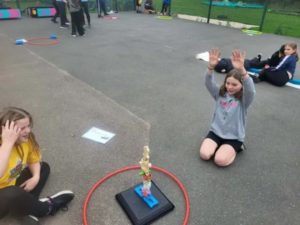
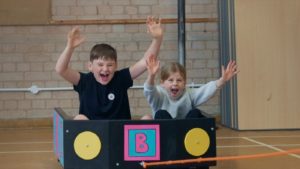
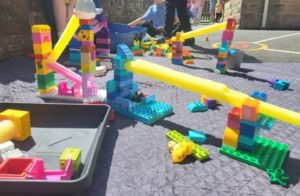
Team challenges where a group has to communicate, share out roles and support each other teach resilience and belonging in a way a worksheet never can. Think cooperative problem-solving, parachute games, or a challenge that only works if everyone contributes. When a struggling child is cheered on by their team, that is wellbeing in action.
This is close to our hearts. When we bring a bespoke workshop day into a school, our team-building and PE-style activities are designed so that connection and confidence come first, and competition comes a distant second.
If your week is starting to feel like a lot to hold on your own, this might be the moment to bring in a hand. Have a look at our workshops to see how a full day, planned and delivered by two qualified teachers, could take the pressure off while giving your children something special.
River of Calm: a mindfulness session younger children actually understand
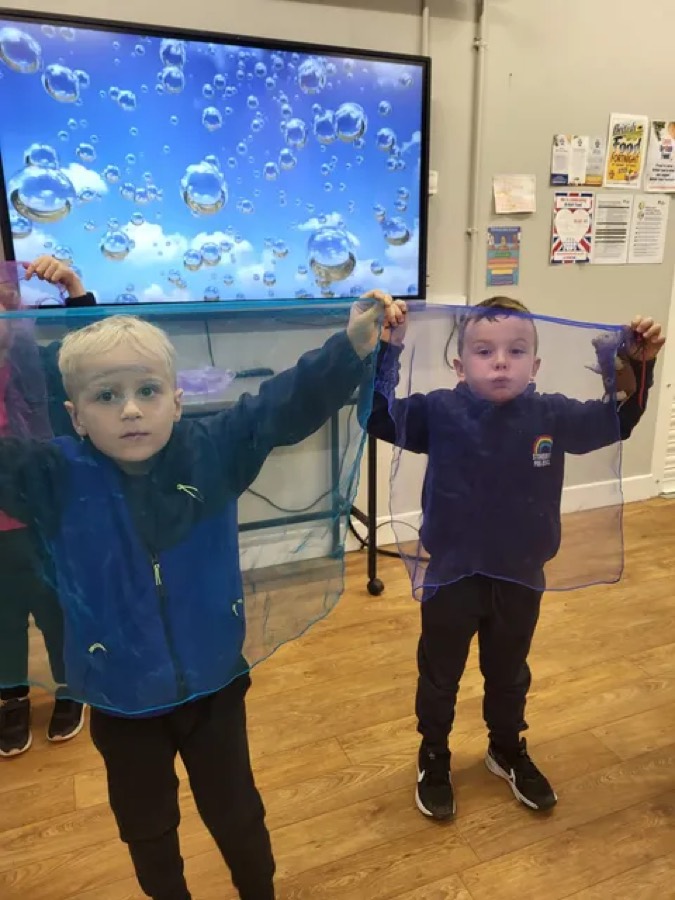
One of the activities schools ask us about most is River of Calm, our wellbeing and mindfulness session for younger children. Mindfulness can feel abstract to a five-year-old, so we make it tangible.
Using props, colour and gentle interactive activities, we help children understand and regulate their emotions: what different feelings are, where they sit in the body, and simple, practical things they can do when big feelings arrive. It is calm, warm and unhurried, and because we are teachers, it is pitched exactly right for the age in front of us.
It works beautifully as the centrepiece of a Children’s Mental Health Week, giving your youngest children a shared experience and a shared vocabulary they will keep using long after February.
How to make the week memorable (not just marked)
Here is the honest bit. The difference between a week children forget and a week they talk about at home usually comes down to a few small things.
- Give it a shared moment. One whole-school or whole-class experience everyone took part in becomes the anchor children remember.
- Involve the grown-ups. When staff model talking about feelings and taking a breath, children learn it is normal and safe. Loop parents in with one simple takeaway too.
- Keep it going. A calm corner, a daily check-in, a weekly kindness tally: small habits that outlast the week are what shift a culture.
- Let someone else carry it sometimes. You do not have to be the expert on everything. Bringing in a dedicated wellbeing day can be a gift to your staff as much as your pupils.
Always follow your own school’s safeguarding and wellbeing procedures, and keep your PSHE and wellbeing leads at the centre of your planning. The ideas here are here to support that, never to replace it.
A beautiful way to mark the week
You can absolutely run a wonderful Children’s Mental Health Week with the ideas above and a bit of creativity, and we hope this has given you a proper head start. But if you would love your children to have one truly special, hands-on day, delivered by two qualified primary teachers who bring all the equipment and all the energy, that is exactly what we do.
Every day we run is bespoke: your day, your way. We build it with you on a friendly planning call, around your children, your priorities and your budget. Whether that is River of Calm for your little ones, a wellbeing-themed team-building day for your juniors, or a mix of both, we would love to help you make this year’s week the one they remember.
We are a small, local business covering Derbyshire, South Yorkshire and Nottinghamshire, and we would be delighted to hear what you are planning. Arrange a planning call and let’s make Children’s Mental Health Week something your whole school looks forward to.